
Virtual reality isn’t just for gamers anymore; it’s taking the world by storm in ways that’ll make your head spin—literally. From immersive training programs to virtual travel experiences, VR is reshaping how people interact with technology and each other. If you thought the future was all about flying cars and robot butlers, think again. It’s about slipping on a headset and stepping into a whole new universe without leaving your couch.
Overview of VR Trends
Virtual reality (VR) continues to evolve, showing significant trends that shape its applications. Immersive experiences now dominate the landscape, pushing VR beyond gaming and into various sectors. The education field increasingly utilizes VR for training simulations, enhancing learning through realistic scenarios.
Healthcare professionals benefit from VR applications, improving patient care and surgical training. Companies are employing VR to offer virtual tours, allowing potential clients to explore facilities without physical presence. Architecture and real estate sectors leverage VR to present projects, enabling potential buyers to visualize spaces.
Social interactions within VR platforms are on the rise, fostering community engagement and collaboration. Users can attend virtual events, participate in gaming tournaments, or simply socialize in immersive environments. The gaming industry remains crucial, with developers integrating augmented reality features to enrich user experiences.
Technological advancements also play a vital role in VR trends. Improvements in headset affordability and performance allow wider accessibility. As hardware capabilities expand, experiences become more immersive, attracting both casual users and professionals.
Finally, the growth of content creation tools empowers developers to design unique VR experiences. Increased creativity leads to innovative applications across entertainment, education, and therapy. Each of these trends collectively marks a significant shift towards a more integrated, immersive future in virtual reality.
Emerging Technologies in VR
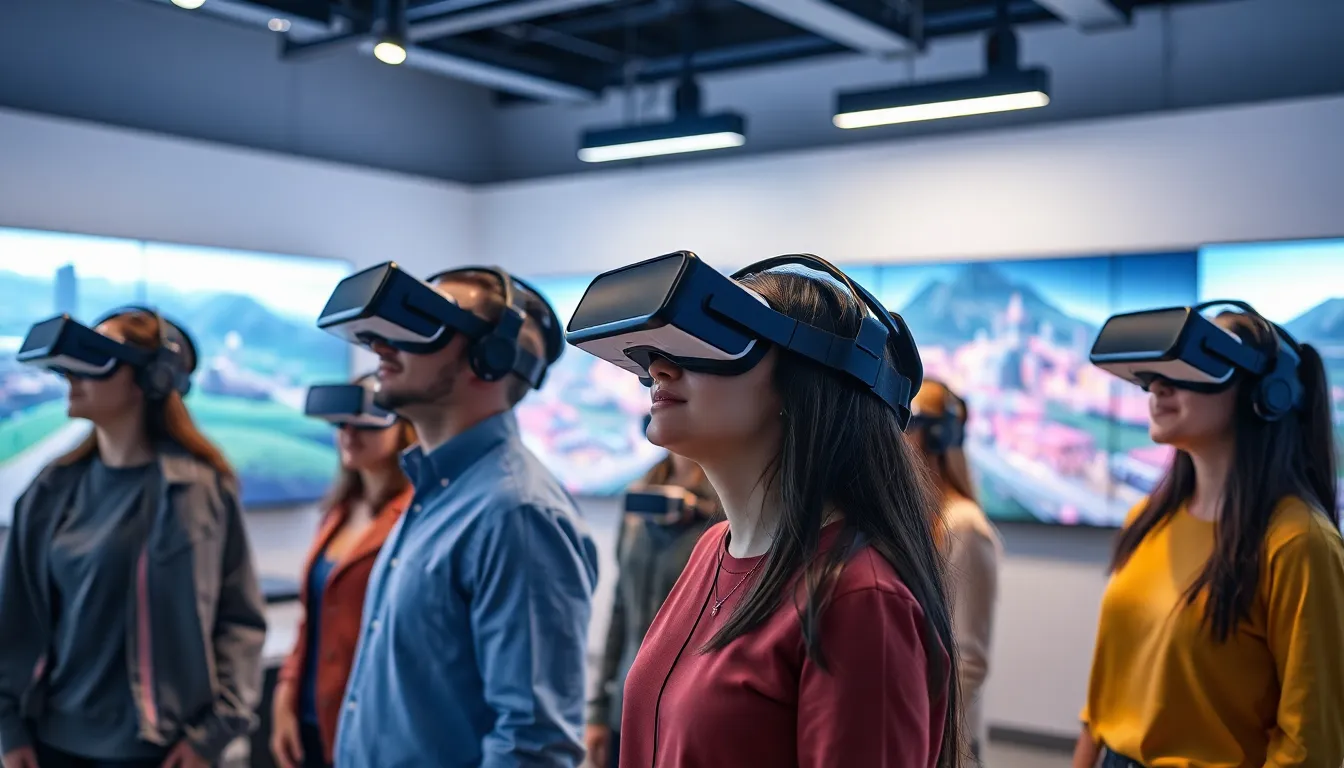
Emerging technologies continue to shape and redefine the virtual reality landscape. This evolution drives new opportunities across various sectors.
Artificial Intelligence Integration
AI integration enhances VR experiences significantly. Personalized content adapts to user preferences, creating tailored interactions. Intelligent algorithms analyze user behavior, enabling dynamic environments. Chatbots provide real-time support in virtual settings, offering on-demand assistance. Enhanced learning occurs through adaptive training simulations, allowing users to progress at their own pace. Together, these developments streamline operations and improve user engagement.
Enhanced Graphics and Realism
Enhanced graphics and realism elevate the immersive quality of VR. High-resolution displays showcase lifelike environments with remarkable detail. Realistic audio complements visuals, creating a more convincing atmosphere. Improved rendering techniques deliver fluid motion and lifelike avatars, enriching social interactions. Advanced physics engines simulate real-world movements, enhancing user experiences. These advancements offer unparalleled realism across training, entertainment, and design applications.
VR Applications Across Industries
Virtual reality (VR) is making significant inroads in various industries, enhancing experiences and processes in ways once thought impossible.
Gaming and Entertainment
Gaming continues to lead the charge in VR applications. Developers create immersive worlds that captivate players, offering experiences deeper than traditional gaming. Live events in virtual spaces attract massive audiences. Players often engage in social interactions, enhancing the gaming experience. Innovations like haptic feedback increase immersion, allowing gamers to feel their actions in the virtual environment. Peak interest in VR gaming spurred by popular titles and multiplayer experiences solidifies VR’s role in entertainment.
Healthcare Innovations
Healthcare practitioners utilize VR for training and patient care. Surgical simulations enable professionals to practice complex procedures without risk. Therapeutic applications allow patients to confront phobias or manage pain through distraction. Studies indicate that VR enhances patient engagement during treatments, leading to positive outcomes. Remote consultations leverage VR technology, facilitating communication between doctors and patients. Emerging research continues to explore VR’s potential in medical training and rehabilitation.
Education and Training
VR is revolutionizing education and training sectors. Immersive environments allow students to explore historical events or complex scientific concepts firsthand. Businesses adopt VR for workforce training, creating realistic scenarios for new hires. Engagement levels rise with interactive learning experiences, and retention improves as a result. Virtual field trips provide students with opportunities to experience diverse cultures and environments. Evidence shows that VR significantly enhances learning outcomes in various educational contexts.
Social Impacts of VR Trends
Virtual reality (VR) trends notably influence social interactions and ethical considerations, reshaping how individuals connect and collaborate.
Changing User Interactions
VR technology fosters new ways for users to interact with one another, enhancing social experiences. Through virtual environments, people engage in events and activities regardless of geographical limitations. Avatars create unique identities, allowing individuals to express themselves in innovative ways. Shared experiences in games or meetings promote deeper connections among participants. As social platforms expand, features like virtual hangouts and collaborative workspaces emerge, simplifying remote collaboration. Enhanced immersion leads to improved empathy and understanding among users, altering traditional communication methods significantly.
Ethical Considerations
Ethical concerns arise as VR becomes more pervasive in society. Privacy issues emerge, particularly regarding user data collection and surveillance within virtual spaces. Users often overlook implications of their digital actions, leading to potential harassment or abuse. Psychological effects also warrant attention, especially as virtual experiences blur the lines between reality and fantasy. Addressing content moderation becomes crucial to ensure safe environments for all participants. As VR technology evolves, developers and regulators must establish frameworks that prioritize user safety and ethical practices in virtual experiences.
Future Predictions for VR Trends
Advancements in virtual reality technology promise transformative changes across various sectors. Enhanced accessibility through lower headset prices allows a wider audience to experience VR. Predicted growth in VR applications in healthcare could improve therapeutic practices and patient outcomes. Educational institutions are likely to adopt immersive learning environments, drastically enhancing engagement and retention.
The integration of artificial intelligence within VR environments streams personalized content directly to users. Emerging AI capabilities open new avenues for adaptive training simulations that cater to individual learning styles. Anticipated advancements in graphics technology will deliver lifelike visuals and audio experiences, further immersing users in virtual worlds.
Trends indicate that social interactions within VR platforms will expand, providing opportunities for virtual meetups and events. Innovators are expected to develop new tools that enhance content creation, nurturing a thriving ecosystem of diverse applications. Companies in the real estate sector will increasingly rely on VR for virtual tours, enabling potential buyers to explore properties from their homes.
Additionally, the rise in eSports and multiplayer gaming experiences within VR continues to capture significant attention. Communities are forming around shared virtual environments, leading to increased collaboration and connection among users. Ethical considerations relating to privacy and user data become crucial as the technology evolves, emphasizing the need for protective frameworks.
Growing interest in VR applications suggests a future where immersive simulations redefine traditional training, entertainment, and design practices. In summary, the anticipated developments in VR technology indicate a shift towards more integrated and realistic experiences across multiple industries.
The future of virtual reality is undeniably bright and full of potential. As it continues to expand across various industries the impact on training healthcare and social interactions will redefine how people experience the world. With advancements in AI and graphics technology VR is becoming more immersive and accessible than ever before.
As these trends evolve they’ll create new opportunities for connection and collaboration while also raising important ethical considerations. The ongoing integration of VR into everyday life promises to transform not just how individuals engage with technology but also how they relate to one another. Embracing these changes will be key to navigating the exciting landscape of virtual reality ahead.