
Picture this: a classroom where trigonometry isn’t just equations on a whiteboard, but a thrilling adventure in a 3D world. Virtual Reality Learning is stepping in to turn traditional education upside down, and it’s making waves faster than a kid can say, “Can I play now?” With the ability to engage students like never before, this technology isn’t just a fad, it’s a ticket to an immersive experience that commands attention and sparks curiosity. So, why settle for flat images and textbook definitions when you can jump into a whirlwind of virtual excitement? Let’s explore how this digital phenomenon is reshaping our approach to learning.
Understanding Virtual Reality Learning
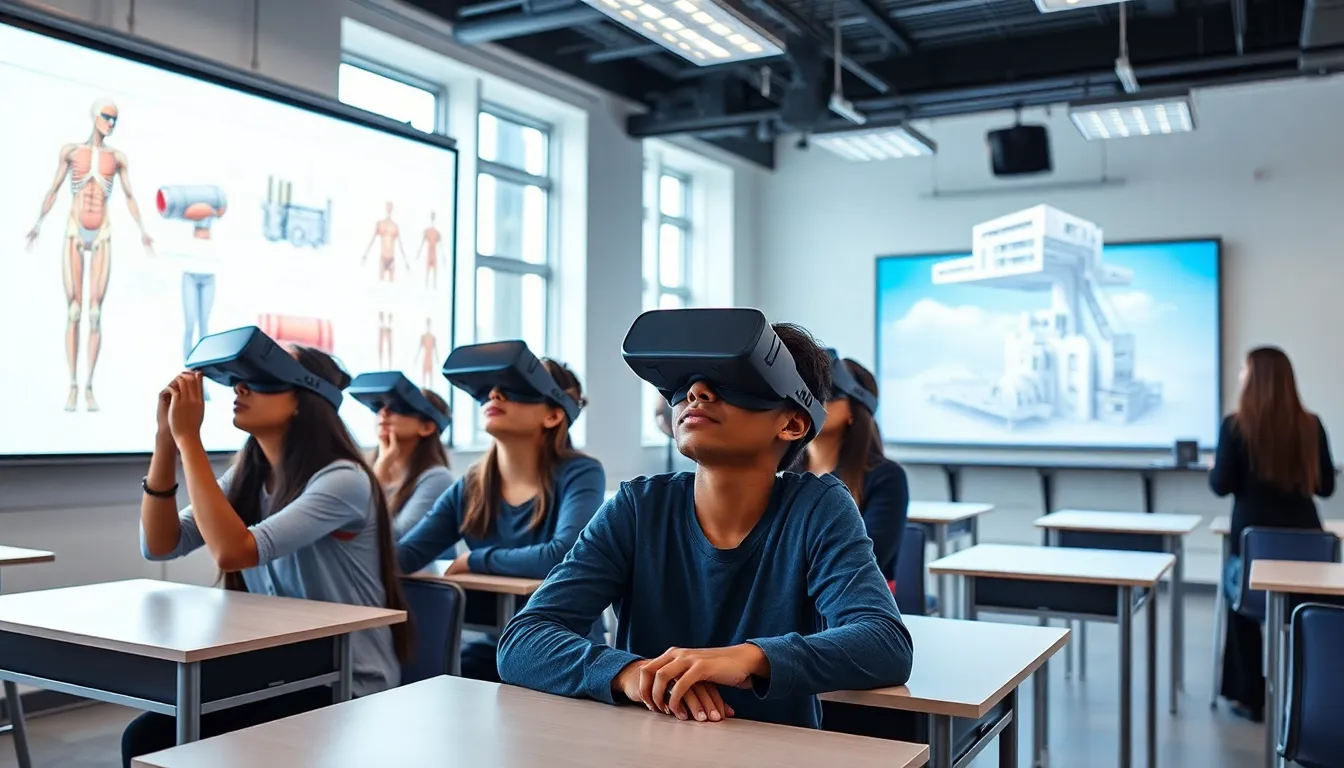
Virtual reality (VR) learning encompasses immersive digital environments where users interact with virtual content using specialized headsets or devices. This technology provides a simulated experience that feels real, allowing learners to explore complex concepts in a 3D space. Imagine stepping inside a historical event or a scientific phenomenon: suddenly, education transforms from passive reading to active involvement.
The essence of VR learning lies in its ability to mimic real-world scenarios. For instance, medical students can practice surgery in a risk-free setting or architects can build and interact with their designs before construction.
As educators strive to create engaging learning experiences, virtual reality opens up limitless possibilities. While the concept itself isn’t new, the advancements in technology now make it more accessible and effective for educational purposes.
Benefits of Virtual Reality in Education
The advantages of incorporating VR technology in education are numerous and highly impactful. First and foremost, VR enhances engagement. With traditional learning methods, maintaining student interest can be a challenge. But, VR lessons are captivating, grabbing student attention and motivating them to participate.
Also, VR fosters experiential learning. Instead of reading about the solar system, a student can “visit” Mars or experience a journey through a black hole. These experiences not only make learning more memorable but also help solidify knowledge as students actively participate rather than passively absorb information.
Also, accessibility is another key benefit. Virtual reality can democratize education by offering high-quality learning experiences to students regardless of their location. Whether one is in a bustling city or a remote village, VR brings the world into their classroom.
Besides, it accommodates various learning styles. Some learners thrive in visual environments, while others benefit from kinesthetic experiences. VR caters to these diverse preferences, ensuring that all students have the opportunity to thrive.
Applications of Virtual Reality in Different Fields
The applications of virtual reality in education extend far beyond the typical classroom. In healthcare, VR is being used for surgical simulations where students can practice intricate procedures without the risk of harming patients. This hands-on approach allows for safe trial and error, significantly boosting student confidence.
The field of engineering has also seen significant benefits. Students can interact with complex machinery and systems in a virtual environment, gaining practical knowledge before stepping into the real world. By visualizing designs in 3D, aspiring engineers can better grasp the technical aspects of their projects.
Also, history classes transform dramatically through VR. Instead of merely reading about the Renaissance, students can walk through recreated historical sites, experiencing the ambiance and culture of the time. This immersive history lesson becomes an unforgettable journey that ignites a passion for learning.
Even language learning is enhanced. Students can practice conversations in immersive environments, interacting with virtual characters and developing fluency in real-time scenarios. The scope of VR applications seems boundless, with each innovation bringing fresh opportunities for engagement and education.
Challenges and Limitations of Virtual Reality Learning
Even though its remarkable potential, virtual reality learning does face several challenges. One of the greatest obstacles is the cost of technology. High-quality VR headsets and software can be expensive, making it difficult for some schools to invest in these resources. Educational institutions must weigh the benefits against the financial implications.
Besides, there is a learning curve associated with using VR tools. Both educators and students may need training to effectively use this technology. An inadequate understanding can hinder the learning experience rather than enhance it.
Also, not all content is suitable for VR. While many subjects lend themselves well to this immersive approach, others might not translate effectively into virtual experiences. Developing high-quality, relevant content requires time, expertise, and often collaboration between educators and tech developers.
Finally, there are concerns around accessibility. Not all students may have the opportunity to use VR, leading to a digital divide that can further exacerbate existing inequalities in education.
Future of Virtual Reality in Education
The future of virtual reality in education is promising and brimming with potential. As technology continues to evolve, we can expect more affordable and accessible VR solutions. Increased investment in educational technology may lead to wider adoption in classrooms across the globe.
With advancements in VR, the experiences will also become richer. Imagine fully interactive lessons where students can not only observe but also manipulate their environments in real-time. This level of engagement will further solidify the role of VR as a core component of modern education.
Also, integrating artificial intelligence with VR could provide personalized learning experiences, adapting content to fit individual student needs. This means that learners could progress at their own pace in an environment tailored specifically for them.
As the educational landscape shifts, embracing the innovative possibilities of virtual reality will not just enhance learning experiences: it may also redefine what it means to learn in the twenty-first century.