
In a world where reality often feels just a tad too mundane, D simulations swoop in like a superhero with a cape made of pixels. They transform the ordinary into extraordinary, offering an immersive experience that leaves users questioning what’s real and what’s just a clever trick of the imagination. Whether it’s for training, entertainment, or just a good old-fashioned escape from reality, these simulations pack a punch that can’t be ignored.
Overview Of D Simulations
D simulations serve as advanced tools that enhance user experience through a blend of reality and imagination. These simulations utilize cutting-edge technology to create immersive environments, allowing users to engage deeply with the content. Participants can find applications in various sectors, including education, healthcare, and entertainment, making D simulations versatile resources.
In education, D simulations facilitate interactive learning by allowing students to visualize complex concepts. For instance, a biology student might explore the human body through a detailed 3D simulation. Healthcare professionals use these simulations for realistic training without risk to patients, improving skills through practice in controlled settings.
Entertainment industries leverage D simulations to deliver captivating experiences. Virtual reality games transport players into different worlds, heightening engagement and enjoyment. Cinematic experiences also benefit, as filmmakers utilize D simulations for stunning visual effects that enhance storytelling.
Businesses increasingly adopt D simulations for training and development purposes. Employees can participate in realistic scenarios that mimic real-world challenges, promoting problem-solving skills. Additionally, D simulations provide data analytics that help companies understand user behavior, refining offerings to better meet customer needs.
Investment in D simulations continues to grow, reflecting their importance in various fields. Organizations are now prioritizing these technologies to gain competitive advantages. By merging entertainment with practical training, D simulations have positioned themselves as essential tools in modern applications.
Importance Of D Simulations
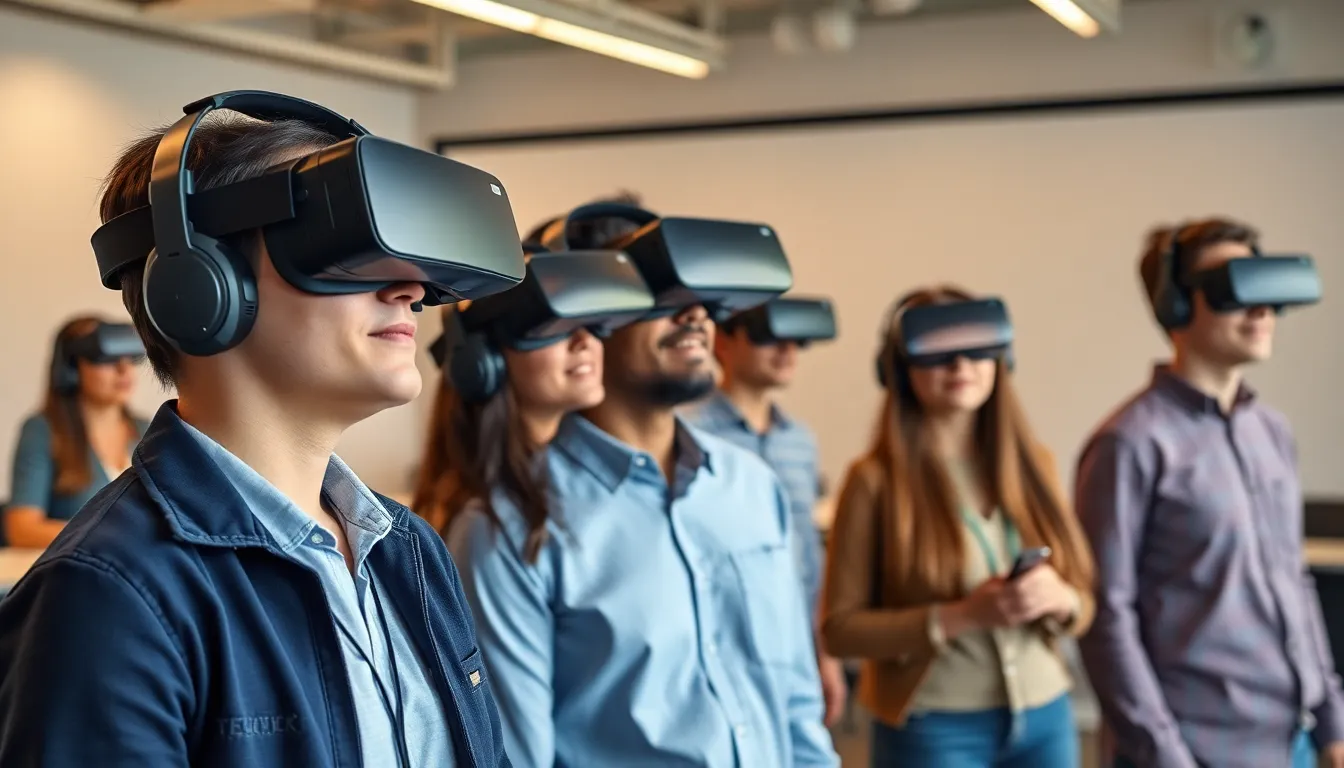
D simulations play a crucial role in enhancing experiences across various domains. Their diverse applications and substantial benefits underscore their significance.
Applications In Various Fields
Educational institutions use D simulations to foster interactive learning environments. Healthcare professionals benefit from practicing skills in assessments that mimic real-life scenarios. Industries integrate D simulations for employee training, allowing workers to engage in scenario-based learning. Moreover, the entertainment sector leverages these simulations to create immersive virtual reality experiences that attract audiences. Each application highlights the versatility and value of D simulations in improving understanding and engagement.
Benefits Of Using D Simulations
Utilizing D simulations leads to enhanced retention of information for users. Participants actively engage in experiences that promote problem-solving skills effectively. Engaging environments provide individuals the freedom to explore without the fear of real-world consequences. Cost-efficiency also emerges as a significant benefit, allowing organizations to save resources during training initiatives. Enhanced user satisfaction further strengthens D simulations as a tool, driving higher levels of engagement and motivation across various sectors.
Types Of D Simulations
D simulations can be categorized into two main types: continuous and discrete. Each type serves distinct purposes and applications across various fields.
Continuous D Simulations
Continuous D simulations provide ongoing experiences that adapt and evolve in real-time. They often immerse users in dynamic environments where interactions lead to immediate feedback. For instance, in virtual reality training for healthcare professionals, scenarios change based on user actions. Such simulations allow trainees to respond to situations as they unfold, enhancing critical thinking and decision-making skills. Industries utilize continuous D simulations to facilitate an engaging exploration of processes that require adaptability and real-time adjustments. Users benefit from a deeper understanding of complex subjects, fostering retention and practical skill application.
Discrete D Simulations
Discrete D simulations create distinct, isolated experiences designed to showcase specific scenarios or events. These simulations typically involve set conditions, with users engaging in predetermined tasks within a structured environment. An example includes simulation-based tests for engineering students, where they analyze the outcomes of designed experiments. Such simulations help users grasp theoretical concepts by providing controlled environments to experiment without risks. Organizations rely on discrete D simulations for focused training exercises, efficiently addressing targeted skills and knowledge gaps. Users experience a clear understanding of success factors and potential pitfalls in their specific fields.
Tools And Software For D Simulations
Various tools and software facilitate D simulations, enhancing user experiences significantly. These technologies play essential roles in numerous sectors, including education and healthcare.
Popular Software Options
Several software options dominate the market for D simulations. Unity stands out for its versatility, used extensively in game development and VR experiences. Unreal Engine excels in creating high-fidelity graphics, attracting designers focused on cinematic quality. Autodesk Maya offers robust 3D modeling features ideal for educational applications. Additionally, Vissiblu presents advanced solutions specifically tailored for healthcare training, allowing realistic scenario practices. Each software serves unique needs, appealing to different audiences within D simulation realms.
Comparison Of Features
Examining features reveals varying strengths among D simulation software. Unity allows for real-time rendering and cross-platform integration, ensuring accessibility. Unreal Engine features impressive photorealistic visuals while emphasizing customizable environments. Autodesk Maya specializes in complex modeling tools suitable for intricate projects. Vissiblu prioritizes user-friendly interfaces and healthcare-specific functionalities, streamlining the training process. By comparing these features, users can select software aligning with their requirements, enhancing their simulation experiences effectively.
D simulations are revolutionizing the way people interact with technology across various sectors. Their ability to create immersive experiences is transforming training and education, enhancing user engagement and retention. As organizations increasingly recognize the benefits of these simulations, from cost-efficiency to improved problem-solving skills, their adoption is likely to grow.
With advancements in software tools and technologies, the future of D simulations looks promising. They’ll continue to blur the lines between reality and imagination, offering innovative solutions that cater to diverse needs. The ongoing investment in this field highlights its significance in shaping experiences that are not just informative but also captivating. Embracing D simulations is essential for those looking to stay ahead in an ever-evolving landscape.