
In a world where robots are no longer just the stuff of science fiction, robotics development is taking center stage. Imagine a future where your coffee is brewed by a friendly robot or your lawn is mowed without breaking a sweat. Sounds like a dream, right? Well, that dream is becoming a reality faster than you can say “artificial intelligence.”
Overview of Robotics Development
Robotics development encompasses various fields, integrating engineering, computer science, and artificial intelligence. Modern robots operate in diverse environments, such as homes, factories, and healthcare settings. Each application showcases unique capabilities aimed at enhancing efficiency and safety.
The development process typically involves several stages, including research, design, testing, and deployment. Prototypes tested in real-world scenarios help identify functional improvements and user interface enhancements. Iterative feedback enables teams to refine designs, ensuring optimal performance.
A notable aspect of robotics is the integration of AI, which enables machines to learn from experience and adapt to new tasks. Machine learning algorithms empower robots to interpret data, recognize patterns, and make decisions independently. Tasks such as navigation, object recognition, and speech processing benefit significantly from these advancements.
Collaboration plays a crucial role in advancing robotics technology. Industry partnerships with universities, research institutions, and tech companies foster innovation. Sharing resources and expertise accelerates development cycles, leading to faster breakthroughs in robotic capabilities.
Market demand influences robotics development as well. Businesses seek automation solutions to reduce operational costs and improve productivity. Recent studies indicate the global robotics market is expected to reach $210 billion by 2025, highlighting the growing interest in this technology.
Ethical considerations shape the robotics landscape. Developers focus on creating safe and reliable systems, addressing concerns related to privacy, employment, and security. Public discourse around ethical implications encourages transparency and responsible innovation in robotics.
Innovation in robotics development continues to evolve rapidly. Technologies that once seemed futuristic are becoming commonplace, transforming the way humans interact with machines. As advancements continue, robots will increasingly handle more challenging tasks, integrating seamlessly into daily life.
Key Technologies in Robotics
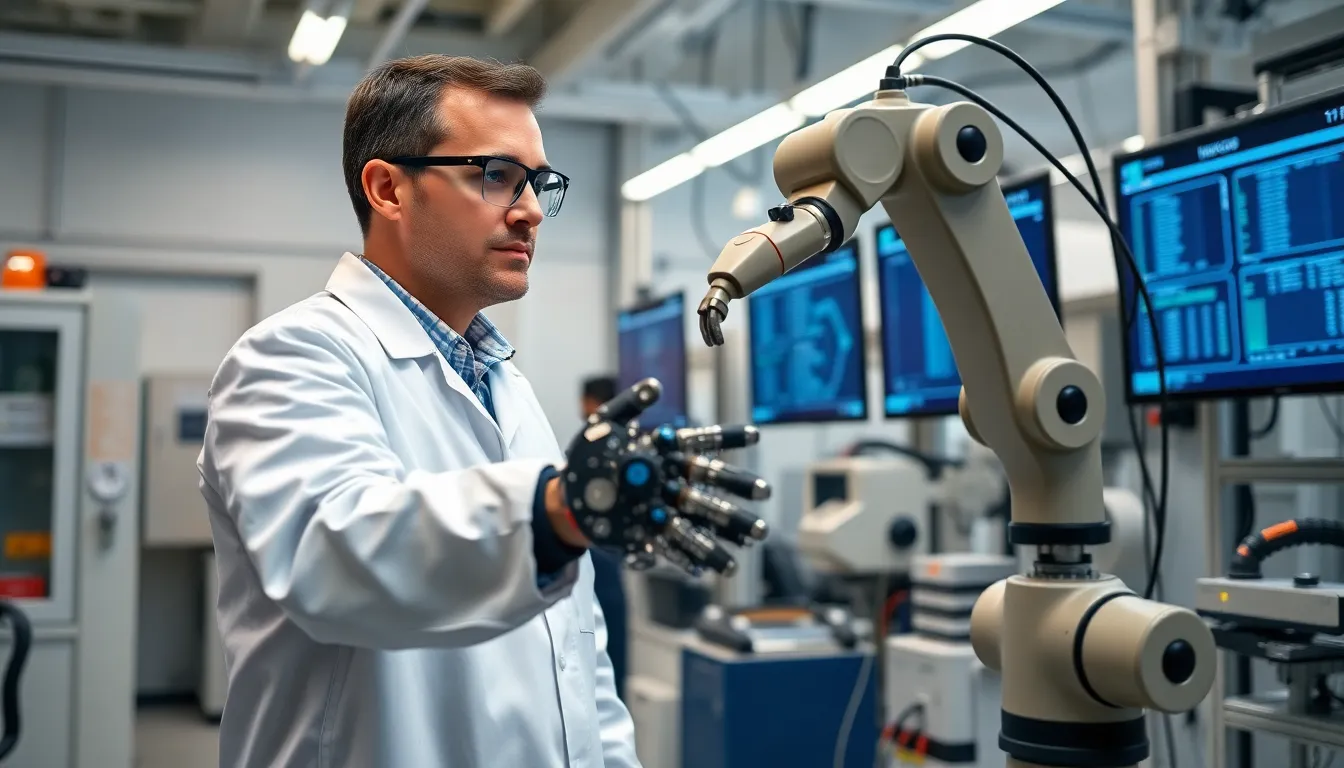
Key technologies underpin robotics development, enabling machines to operate effectively in various settings.
Artificial Intelligence in Robotics
Artificial intelligence enhances robotic capabilities significantly. It allows machines to learn from experiences, improving their decision-making and adaptability. Robots equipped with AI can navigate complex environments, recognize objects accurately, and respond to speech commands. Developers employ machine learning algorithms to refine performance based on user interactions, creating smarter systems. By integrating natural language processing, robots can engage in meaningful conversations, improving user experiences.
Sensor Technologies
Sensor technologies play a vital role in robotics functionality. They provide robots with the ability to perceive their surroundings through data collection from various inputs. Cameras, LiDAR, and ultrasonic sensors enable robots to detect obstacles, measure distances, and assess environmental conditions. Accurate data from these sensors ensures robots can operate safely and effectively. Advanced sensors contribute to enhancing navigation, allowing machines to make informed decisions based on real-time information.
Actuators and Grippers
Actuators and grippers are essential for robotic movement and interaction. Actuators serve as the muscles of robots, converting energy into motion for precise control. Various types of actuators, such as electric, pneumatic, and hydraulic, empower robots to perform different tasks. Grippers enable robots to manipulate objects, using tailored designs to enhance gripping strength and precision. Combining advanced actuators with innovative gripper designs allows robots to handle diverse tasks, from assembly to delicate operations.
Applications of Robotics Development
Robotics development serves various sectors, showcasing its versatility and effectiveness in addressing modern needs.
Manufacturing and Automation
Manufacturing industries extensively use robots to enhance efficiency and precision. Automated systems streamline operations like assembly line work and quality control. Robots perform repetitive tasks swiftly, reducing errors and increasing production rates. Collaborative robots, or cobots, work alongside human operators, improving safety while boosting productivity. According to a report, automating manufacturing processes can increase productivity by up to 30%. These advancements lead to cost savings and enable more innovative production processes that adapt to demand fluctuations.
Healthcare Robotics
Healthcare professionals leverage robotics to improve patient care and streamline processes. Surgical robots assist in performing complex procedures with greater accuracy, reducing recovery times for patients. Rehabilitation robots support patients with mobility challenges, personalizing therapy to enhance recovery outcomes. Hospitals use robots for medication delivery, ensuring timely access to prescriptions and minimizing human error. With the global healthcare robotics market projected to surpass $45 billion by 2026, these applications are reshaping how healthcare is delivered, emphasizing efficiency and patient experience.
Service Robots
Service robots play an essential role in various sectors, providing support in hospitality, retail, and home environments. In hospitality, robots greet guests and assist with check-in, enhancing customer experience. Retailers deploy robots to manage inventory and assist shoppers, improving efficiency and customer satisfaction. In domestic settings, robotic vacuum cleaners and lawn mowers handle everyday tasks, freeing up time for users. With service robots expected to expand rapidly, their presence in everyday life is likely to increase, revolutionizing how services are delivered and experienced.
Challenges in Robotics Development
Advancements in robotics bring significant challenges that developers must navigate. Both technical and ethical considerations arise as robots become integral to daily life.
Technical Challenges
Robotics development faces various technical hurdles. Designing robots that can operate reliably in unpredictable environments remains a priority. Achieving seamless interaction between hardware and software often complicates the development process. Adapting to rapid technological changes requires continuous updates to systems and algorithms. Ensuring robust safety mechanisms is essential to prevent accidents during operation. Performance limitations in sensors and actuators can hinder a robot’s effectiveness in certain applications. Developers must also tackle issues related to power supply and energy efficiency. Innovating solutions for these technical challenges takes collaboration and extensive research.
Ethical Considerations
Ethical considerations play a vital role in robotics development. Privacy concerns arise as robots collect data to improve functionality. Developers must prioritize user safety, creating systems that minimize risks. Addressing potential job displacement is crucial to mitigate societal impacts. Transparency in algorithms and decision-making processes promotes trust in robotic systems. Developers face the responsibility of ensuring that robots operate within ethical guidelines and regulations. These considerations shape public perception and acceptance of robotic technologies. Engaging with stakeholders, including industry experts and communities, can help navigate these ethical landscapes effectively.
Future Trends in Robotics Development
Robotics development is rapidly evolving, with several key trends shaping its future.
Advancements in AI and Machine Learning
Artificial intelligence is revolutionizing robotics. Machines not only learn from data but also improve their performance over time. Enhanced algorithms enable robots to make better decisions in real-time, adapting to complex tasks. For instance, AI-powered robots in manufacturing environments optimize production by adjusting to changing conditions instantly. Progress in machine learning allows for greater accuracy in areas like object recognition and natural language processing. This facilitates smoother interactions between humans and robots, accelerating acceptance in various sectors.
Collaborative Robotics
Collaborative robotics, or cobots, are transforming workplaces. They complement human workers by sharing tasks in a safe and efficient manner. Cobots can assist in assembly lines, where they work alongside employees to increase productivity. Integration of advanced sensors ensures that these robots operate safely around humans. Data indicate that the market for collaborative robotics is expected to exceed $12 billion by 2025, reflecting growing demand across industries. Deployment of cobots enhances workplace safety and efficiency, resulting in a more harmonious human-robot collaboration.
The future of robotics development is bright and filled with possibilities. As robots become more integrated into everyday life they promise to enhance efficiency and improve quality of services across various sectors. The collaboration between industries and research institutions will continue to drive innovation while addressing ethical concerns and technical challenges.
With advancements in AI and machine learning robots are not just tools but partners in tackling complex tasks. As the global robotics market expands the potential for transformative applications will only grow. Embracing these changes will be essential for maximizing the benefits of robotics in society. The journey of robotics is just beginning and it holds the key to a smarter and more automated future.