
In a world where robots are no longer just the stuff of sci-fi movies, diving into robotics courses can feel like stepping into the future. Imagine building your own robot that could potentially bring you coffee—or at least not spill it all over your keyboard. With technology advancing faster than a robot can say “beep boop,” now’s the perfect time to get in on the action.
Overview of Robotics Courses
Robotics courses provide valuable insights into advanced technology and practical applications. These programs cultivate essential skills for students interested in robotics.
Importance of Robotics Education
Robotics education enhances problem-solving skills, fosters creativity, and promotes teamwork. Engaging with robotics equips students for careers in various fields, including engineering, healthcare, and manufacturing. Understanding robotics also enables participants to adapt to rapid technological changes, making them competitive in the job market. Employers prioritize candidates with technical expertise in automation and robotics, recognizing the growing significance of these skills.
Types of Robotics Courses Available
Numerous types of robotics courses exist to cater to diverse interests. Online courses offer flexibility for busy professionals, enabling self-paced learning. University programs provide in-depth knowledge through structured curricula, often culminating in degrees in robotics or engineering. Workshops allow hands-on experience, facilitating practical skills in programming and hardware. Additionally, specialized courses focus on specific areas, including drone technology, robotic process automation, or artificial intelligence integration. Each type presents unique benefits, allowing students to tailor their education to their goals.
Popular Online Robotics Courses
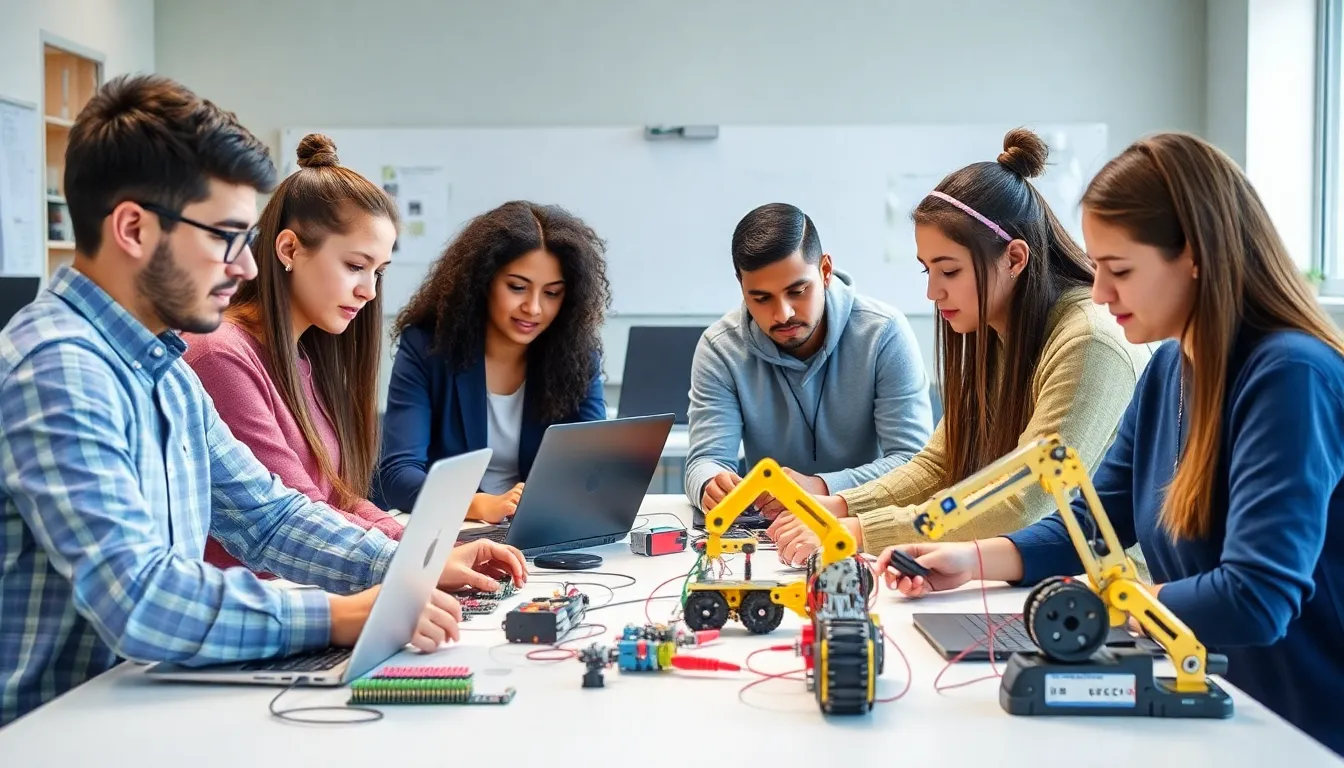
Online robotics courses offer flexible learning options for individuals interested in cutting-edge technology. Students can find various platforms with engaging content to enhance their skills.
Course Platforms to Consider
Several platforms feature comprehensive robotics courses. Coursera provides programs from renowned universities, often allowing learners to earn certificates. edX offers similar courses, focusing on academic rigor and practical skills. Udacity stands out with its nano-degree programs in robotics, emphasizing hands-on projects. Additionally, LinkedIn Learning features short courses tailored for quick upskilling. Each platform enables learners to choose based on their preferred learning pace.
Notable Course Providers
Noteworthy providers excel in delivering quality robotics education. MIT offers free online courses to introduce learners to core concepts. Stanford University also features specialized topics, including autonomous robotics. Georgia Tech stands out with its graduate-level programs focused on robotic systems. These institutions enhance the learning experience by incorporating real-world applications and expert guidance. Students often benefit from the extensive resources and community networks available through these providers.
In-Person Robotics Courses
In-person robotics courses provide hands-on experience and direct interaction with instructors. Such immersive learning environments foster deeper understanding and practical skill development.
University Programs
University programs in robotics often offer comprehensive curricula. These programs cover a range of topics, including robotic design, programming, and automation. Students gain access to advanced laboratories filled with state-of-the-art technology. Courses frequently involve collaborative projects, which prepare students for real-world applications. Institutions like MIT and Stanford emphasize research and innovation, enriching the educational journey with expert-led seminars. Graduates of these programs find themselves well-prepared for careers in various fields, including engineering and healthcare.
Community Workshops
Community workshops offer accessible options for individuals interested in robotics. These local programs focus on practical skills, often introducing concepts through hands-on projects. Participants learn about coding, electronics, and robot assembly in an engaging atmosphere. Workshops typically accommodate people of all ages, promoting inclusivity and teamwork. Local organizations and makerspaces often sponsor these workshops, enhancing community involvement. These short-term courses enhance foundational knowledge and spark interest in advanced robotics education.
Skills Acquired from Robotics Courses
Robotics courses equip students with a blend of technical and soft skills essential for success in the field. Engaging with complex technologies fosters a comprehensive skill set that enables graduates to thrive.
Technical Skills
Students gain programming expertise, learning languages like Python and C++. Building and designing robots enhances mechanical and electrical engineering knowledge. Mastery of sensors and actuators becomes crucial for effective robotics applications. Course participants also understand algorithms and data structures, vital for developing intelligent behaviors in robots. Familiarity with simulation software allows them to test concepts in a virtual environment. Through hands-on projects, they acquire troubleshooting skills, enabling them to diagnose and resolve issues in real-time.
Soft Skills
Collaboration plays a significant role in robotics courses, as teamwork drives many projects. Participants enhance their communication abilities, making it easier to articulate ideas and solutions. Problem-solving skills improve through tackling real-world challenges, fostering creativity and adaptability. Time management becomes essential when working on project deadlines and balancing multiple tasks. Through feedback sessions, individuals learn to accept constructive criticism, leading to personal growth. These soft skills complement technical knowledge, preparing students for dynamic work environments.
Future of Robotics Education
Robotics education continues to evolve, adapting to technological advancements and industry demands.
Trends in Robotics Training
Emerging trends shape the future of robotics training. Virtual and augmented reality technologies offer immersive learning experiences. These tools enhance understanding of complex robotic systems. Online learning environments grow in popularity, allowing students to access courses from anywhere. Collaboration with industry partners leads to real-world problem-solving opportunities. The integration of artificial intelligence into curricula is rising, equipping students with skills to work alongside intelligent machines. Additionally, project-based learning emphasizes practical applications, fostering creativity and innovation in robotics design.
Career Opportunities
Numerous career opportunities await graduates of robotics courses. Robotics engineers focus on design, development, and testing of robotic systems. Automation specialists work in manufacturing to enhance efficiency and productivity through robotic solutions. Many professionals find roles in research and development, contributing to advancements in automation technology. Data scientists analyze data generated by robots, improving performance and decision-making. Additionally, software developers create programs that enable robotic systems to operate effectively. Healthcare robotics technicians assist in the design and maintenance of robotic surgical systems. Career paths are diverse, encompassing sectors such as aerospace, defense, and logistics, all in need of skilled professionals.
Robotics courses present a unique pathway for individuals eager to dive into an innovative and rapidly evolving field. By engaging with practical applications and cutting-edge technology, students can develop essential skills that are increasingly sought after in various industries.
The combination of technical knowledge and soft skills gained through these courses prepares graduates for diverse career opportunities. As robotics continues to transform sectors like healthcare and manufacturing, the importance of education in this area can’t be overstated.
With options ranging from online platforms to hands-on workshops, aspiring robotics professionals have the flexibility to tailor their learning experiences. Embracing this educational journey not only fosters creativity and problem-solving but also positions individuals at the forefront of technological advancement.